
1-805-484-2992
Quotes - Engineering - SalesCondensing is a different job from heating
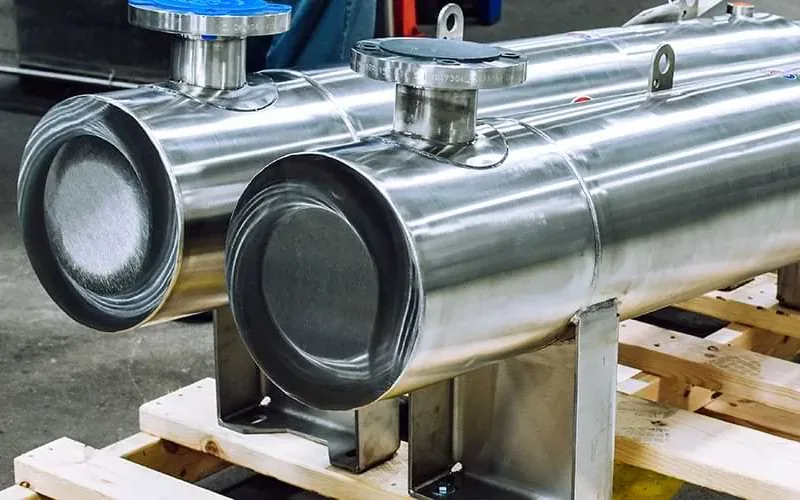
Condensing means pulling latent heat out of a large volume of low-density vapor, so the inlet nozzle, the shell entrance and the flow path are sized to keep pressure drop low, especially under vacuum. Condensate has to leave by gravity as fast as it forms, and gases that will not condense need a vent, or they blanket the tubes and the unit quietly loses capacity. Enerquip builds these as stainless and high-alloy shell-and-tube units, horizontal or vertical.
A shell-and-tube condenser earns its place when the vapor is valuable, regulated or both: a solvent you want back, a reflux stream that belongs in the reactor, a terpene fraction, or a VOC that cannot go to atmosphere. The same construction handles vacuum and positive pressure, and an ASME stamped shell can sit directly on a reactor nozzle or stand on its own saddles or vertical supports. Stainless and alloy units are built in Medford, Wisconsin, in a shop that handles no carbon steel, which keeps free iron off surfaces that a food-grade or pharmaceutical condensate will touch.
The first decision is which side condenses. Shell-side condensing gives the vapor the most room and the lowest pressure drop, which suits vacuum systems and large vapor flows. Tube-side condensing keeps the product inside polished, drainable tubes that can be cleaned and inspected end to end, which is why pharmaceutical units usually work that way. Put the condensing on the wrong side and the unit floods, chokes or will not clean.
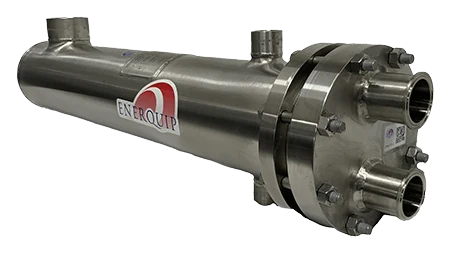
A condenser that cannot drain its condensate or vent its non-condensables loses surface on day one, whatever size the drawing shows.
Drain and vent paths are drawn into the first layout of every unit.
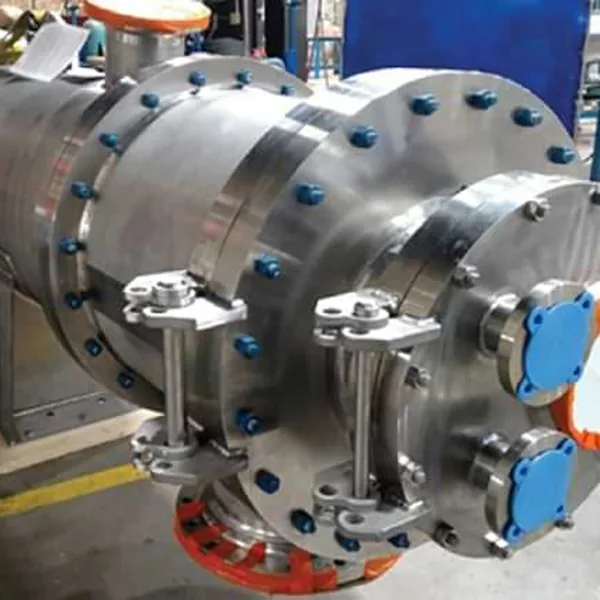
Built around the vapor you have
- Vacuum or pressure duty on the same construction
- Sight glasses to watch condensate and level
- Level gauge ports and condensate collection sumps
- Vertical U-tube knock-back with removable bundle
- Horizontal or vertical, single or multi-pass
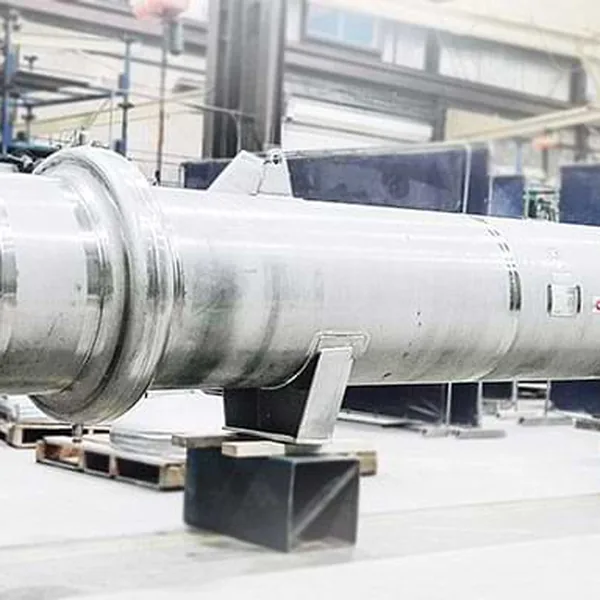
Cleanable where product touches
- Tube-side condensing with ASME-BPE tri-clamp ends
- Double tubesheet option keeps the two fluids apart
- Electropolished tubes, often 20 Ra on pharma units
- CIP spray ball assemblies for in-place washing
- Chloride-free insulation under polished jackets
Codes and Options


Condenser sizes, materials and options
Every condenser is designed to its vapor, coolant and operating pressure, so this table shows the envelope Enerquip works within rather than a fixed model list.
| Specification | Detail |
| Shell diameter | Up to 48", larger depending on weight |
| Tube styles | U-tube or straight tube, single or multi-pass |
| Materials | 304L, 316L, duplex, Hastelloy, AL-6XN, titanium |
| Service | Vacuum or pressure |
| Codes | TEMA, ASME stamped, 3-A, PED, CRN |
| Connections | Sanitary tri-clamp to ASME-BPE, ASME flanged, NPT |
| Finishes | Passivated; electropolished, often 20 Ra on pharma units |
| Viewing and level | Sight glasses and level gauge ports |
| Drain and wash | Condensate sumps or chambers, CIP spray ball assemblies |
Condenser types and where each one fits
Solvent recovery and vacuum service
Every pound condensed ahead of the vacuum pump is a pound the pump never moves. In solvent recovery the condenser follows a dryer, still or evaporator and turns solvent vapor back in to a liquid that can be reused or sent for disposal. On a vacuum system it also protects the pump, cutting its load and energy draw and keeping solvent out of its oil or seal fluid. Vacuum duties need generous vapor nozzles, a short open path to the tubes, and a condensate leg or sump that lets liquid leave without breaking vacuum.
Reflux, knock-back and cold trap units
A reflux condenser cools the vapor rising from a tank or reactor and lets the condensate run straight back down; it can mount on the vessel or stand alone, vertical or horizontal. Knock-back and cold trap condensers are vertical U-tube units with a removable bundle. Vapor meets the cold tubes, condensate drains from the shell, and an optional extended shell section gathers liquid below the bundle so it is not swept back up. The removable bundle matters because a trap catches whatever the process sends its way.
Pharma, terpene and essential oil condensers
Pharmaceutical units condense on the tube side so product touches only polished, drainable tubes. Connections are sanitary tri-clamp to ASME-BPE, materials are 304L, 316L or Hastelloy, and single or double tubesheet construction is available; the double tubesheet leaves a gap between the two sheets so a leak shows outside instead of crossing into the product. Terpene and essential oil condensers follow the same sanitary logic at a food-grade finish of 32 Ra or better, with electropolish when the extract must not pick up residue from an earlier batch.
Emissions abatement and starting a quote
VOC abatement condensers chill a vent or process stream until the organic compounds drop out as liquid that can be recycled or collected for disposal instead of reaching atmosphere. Their sizing turns on the outlet concentration you must meet, which sets how cold the coolant has to run. For any condenser, the quote starts with the vapor composition and flow, operating pressure, the coolant and its supply temperature, and how much non-condensable gas rides along with the vapor.
Call and talk it through with an engineer: 1-805-484-2992
Condenser layout and coolant
Vertical suits reflux and knock-back duties, where condensate must fall straight back into a vessel or collect below the bundle, and it saves floor space. Horizontal gives more tube surface per foot of headroom and drains well when the shell is pitched. Choose the orientation from where the condensate has to go, then check that it fits the space.
Non-condensable gas, in most cases. Air leaking into a vacuum system, or nitrogen from a blanketed reactor, collects around the tubes and slows condensation sharply because vapor has to diffuse through it. A vent at the cold end removes it. The other common cause is condensate backing up into the shell because the drain or trap cannot keep up, which floods part of the bundle.
Yes, when it is designed for it. CIP spray ball assemblies wash the vapor side, drainable tube-side layouts let cleaning solution reach every surface, and electropolished finishes shed residue faster. A condenser built without those features can still be cleaned, but usually by pulling the bundle or opening the heads, which turns a wash cycle into a shutdown.
Cooling tower water handles many solvent and reflux duties. Low-boiling solvents, terpenes and tight VOC limits often need chilled water or glycol to reach the outlet temperature, and the colder coolant also reduces the surface required. Size the chiller for the peak vapor load, which in batch work often comes at startup, rather than for steady running.
Related
Solutions
Stock Units
Enerquip stock sanitary U-tube steam heaters in 4 to 10 inch shells, 304L, TEMA C and ASME stamped, often shipping the next business day.
+ Learn More
Process Applications
Cannabis Extraction
Cannabis extraction heat exchangers: subzero ethanol chillers, solvent recovery condensers, evaporators and product coolers in sanitary stainless steel.
+ Learn More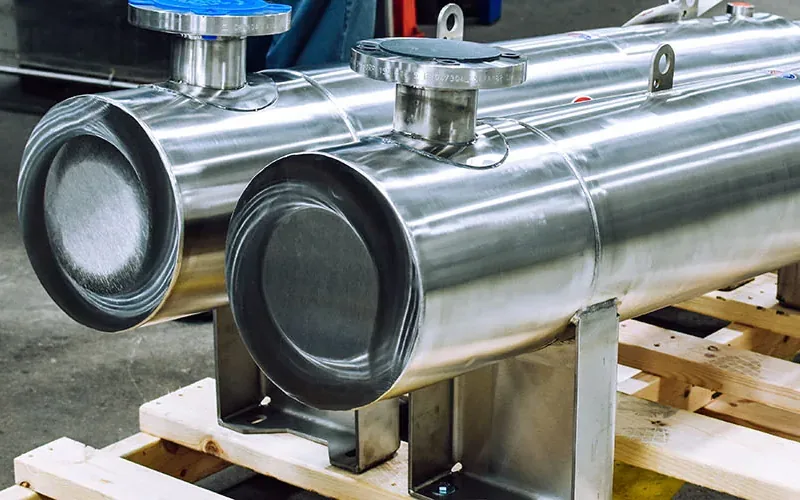
Sanitary Applications
Sanitary Shell & Tube
Sanitary shell-and-tube heat exchangers in 304L and 316L for food, dairy and pharma: product in the tubes, drainable, polished, built to 3-A when needed.
+ Learn More