
1-805-484-2992
Quotes - Engineering - SalesThe product stays where it can be cleaned
Milk, wort, a lotion base or a pharmaceutical buffer: in a sanitary unit the product runs inside polished stainless tubes, with steam, hot water or glycol on the shell. The product side ends in tri-clamp fittings, drains completely and is cleaned by the same CIP circuit that cleans the rest of the line. Enerquip builds these units for food and beverage, dairy, brewing, pharmaceutical and biotech, personal and pet care and cosmetics plants, all in Medford, Wisconsin, a shop that handles stainless and nothing else.
There are three ways to buy one. Stock U-tube steam-to-liquid heaters often ship the next business day. Standard models, about 32 configurations from 4" x 24" to 12" x 108", typically ship in 6 to 8 weeks. Custom units cover everything else: a larger shell, a higher alloy, a double tubesheet, more than four passes. If a steam heater from stock fits your flow and temperature rise, that is the fastest and least expensive answer.
Sanitary construction costs more than industrial construction of the same surface. Seamless tubing, polishing, weld finishing and inspection all add hours. Not every duty needs every upgrade: a 15 Ra electropolished tube does nothing for a hot water loop, while a dairy unit that holds liquid in a dead pocket will cause swab failures that no finish can fix. Let the fluid and the inspector set the finish.
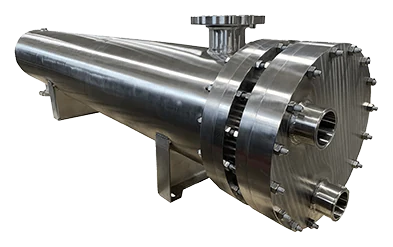
Cleanability is settled on the drawing: a pocket that does not drain cannot be polished or flushed clean once the unit is built.
Pitch, weep slots and radiused returns first; the Ra number second.
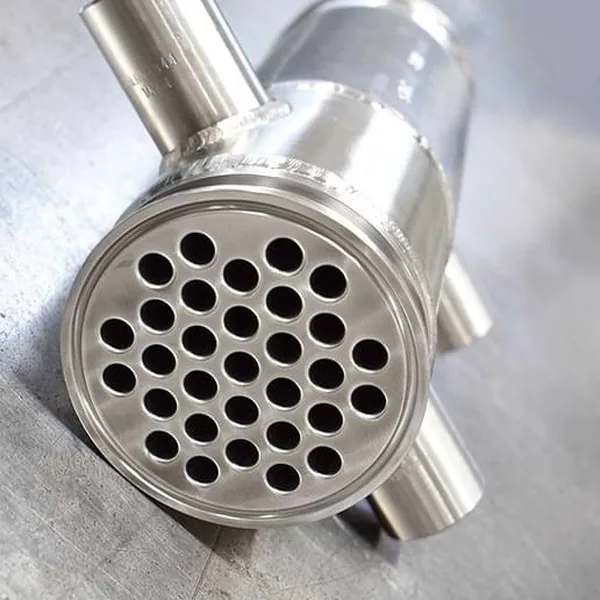
Finishes matched to the product
- 32 Ra or better on 3-A product contact surfaces
- Electropolished product surfaces down to 15 Ra
- Passivation and electropolishing done in-house
- 316L SA-213 seamless tubing on 3-A units
- Exposed gasket design that cleans thoroughly
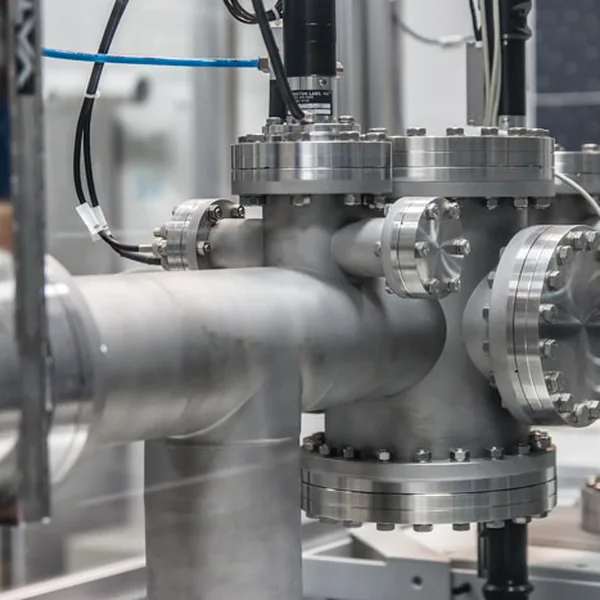
Drops into the skid you have
- Tri-clamp and NPT ends from 1-1/2" to 6"
- Horizontal saddles or vertical mounting supports
- Chloride-free insulation in polished stainless jackets
- Multi-pass bonnets for velocity in a short shell
- Two- or four-pass on 6" to 12" standard shells
Sanitary By Design




Sanitary Build Options
Stock, standard and custom units share the same sanitary approach. This table shows where each path starts and which finishes, codes and fittings can be specified.
| Option | Detail |
| Product side | Tube side, drainable, tri-clamp connections |
| Stock heaters | BEU U-tube, two-pass, 304L; 4" to 10" shells, 36" to 72" long; often ship next business day |
| Standard models | About 32 sizes, 4" x 24" to 12" x 108"; 6 to 8 weeks |
| Custom units | To 48" diameter; single or double tubesheet; multi-pass |
| Materials | 304L and 316L; duplex, Hastelloy, AL-6XN on request |
| Tube finish | 32 Ra or better on 3-A units; electropolish to 15 Ra |
| 3-A | Certified to fabricate to 3-A standard 12-08 |
| Code | ASME Section VIII stamp, TEMA C; PED and CRN available |
| Insulation | Non-asbestos, chloride-free, polished stainless jacket |
Getting a Sanitary Exchanger Right the First Time
Stock, standard or custom
Start with the stock list and work outward. The ten stock configurations use 4", 6", 8" and 10" shells, 36" to 72" long, about 8.8 to 70.3 sq ft, with 1-1/2" to 4" NPT steam inlets and 1-1/2" to 4" tri-clamp product connections. They are TEMA C, ASME stamped and hydro-tested, with a removable bundle sealed by O-rings. One 8" x 54" stock BEUB-3A-S model is a 3-A unit in 316L/304L, and standard BEUB-3A-S sizes cover the rest. When the duty needs more surface or 316L/304L construction, the standard models reach about 163.5 sq ft. A unit stretched past its rating to save weeks costs more in lost throughput than the wait.
What 3-A changes on the drawing
Enerquip is certified to fabricate to 3-A standard number 12-08, takes part in 3-A third-party verification and sits in the work groups that write the standards. A 3-A unit uses 316L SA-213 seamless tubes, 32 Ra or better on every product contact surface and an exposed gasket that cleaning solution can reach. A polished exchanger is not automatically a 3-A exchanger. If your QA program or your customer's auditor asks for the symbol, say so before the order, because it changes the tubing, the gasket design and the paperwork.
Upgrades worth specifying
Most sanitary options either protect the product, protect the people around the unit or recover heat transfer the plant layout took away. Ask for the ones your line needs:
- Insulation under polished stainless jackets so hot shells are safe to touch
- Passivation or electropolishing of product contact surfaces
- Material upgrades to 316L, duplex, Hastelloy or AL-6XN
- Extra tube passes where floor space limits how long the shell can be
- Changes to connections and baffles to fit a liquid duty or meet 3-A
Pasteurizing, holding and cooling product
The same construction handles product duties. It pasteurizes, holds fermentation temperture and cools product before packaging. On a glycol cooler the coolant rise, typically about 10 F across the exchanger, sets the glycol flow, and the closer the product outlet must come to the glycol supply temperature, the more surface the duty takes. On heating, a lower steam pressure trades a little extra area for a cooler tube wall. Heating CIP solution is covered on the CIP heater page.
Call and talk it through with an engineer: 1-805-484-2992
Specifying a sanitary unit
Yes. 304L and 316L cover most food, dairy and personal care work, but brines, acidic sauces and some pharmaceutical solutions push past what 316L resists. Duplex 2205 and 2507, Hastelloy and AL-6XN can be built with the same tri-clamp ends, polish and drainable layout. Give us the fluid, its temperature and its chloride content, since those three decide whether 316L is enough.
It is not the best fit. Stock units are steam-to-liquid heaters, so the shell connections are sized for condensing steam in and condensate out, with a 1" to 2" NPT outlet. A glycol or chilled water cooler needs shell nozzles sized for liquid flow and often more tube passes, which a standard model or a custom unit provides. Send the product flow, both product temperatures and the coolant supply temperature.
Yes. Units can be built to PED for European sites, and a national CRN already covers select 8" stock and standard units, which shortens delivery into Canada because that registration is in place before the order. Name the installation country and province when you request a quote, since the code path changes the design review and the paperwork that ships with the unit.
When product sticks, when bioburden is audited, or when the finish is written into the spec, as it often is in pharmaceutical and personal care work. Electropolishing smooths the peaks a mechanical polish leaves and builds a passive layer. On a clean utility loop it adds cost and nothing else.
The two sides do different jobs. Steam and condensate never touch the product, so a threaded NPT joint is simple, tight and inexpensive there. The product side has to come apart for inspection and leave no crevice for residue, which is what a tri-clamp ferrule and gasket are for. Asking for sanitary fittings on the utility side adds cost without adding hygiene.
Related

Sanitary Applications
Dairy
Dairy heat exchangers that can be built to 3-A standard 12-08: CIP heaters, pasteurizing heaters and product coolers, with stock units ready to ship.
+ Learn More
Sanitary Applications
Food & Beverage
Food and beverage heat exchangers for wort, juices, syrups, sauces and chocolate: sanitary shell and tube units, bayonet tank heaters and CIP heaters.
+ Learn More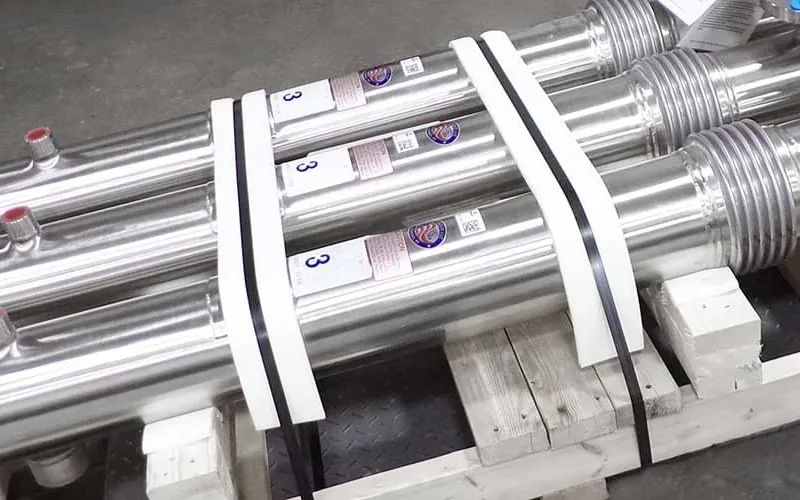
Sanitary Applications
CIP Heaters
CIP heat exchangers for clean-in-place skids: steam on the shell heats caustic, acid and rinse solution to about 185 F in polished stainless tubes.
+ Learn More