
1-805-484-2992
Quotes - Engineering - SalesSwap the bundle, keep the shell and the piping
In most removable-bundle exchangers the tubes wear out long before anything else. The shell, nozzles, supports and the piping bolted to them usually have years left. Replacement tube bundles and O-rings for the stock BEU units are held in stock and ship quickly. Bundles for standard and other Enerquip units are built to order, and gaskets are supplied to match.
Exchangers from other manufacturers are covered too. Enerquip builds custom drop-in bundles to the existing shell bore, tubesheet and nozzle dimensions, ready in as little as a few weeks. A missing original drawing is not a problem: we can reverse-engineer the bundle from the nameplate, a general arrangement drawing or the ASME U-1 data report, with field measurements filling any gaps.
A new bundle is not always the right call. If the shell has thinned, the nozzles are cracked or the duty has outgrown the unit, a bundle only buys time. In that case a complete exchanger can cost less than you expect, and a stock unit often ships the next business day. Send photos of the shell along with the bundle and we will tell you which way the numbers point.
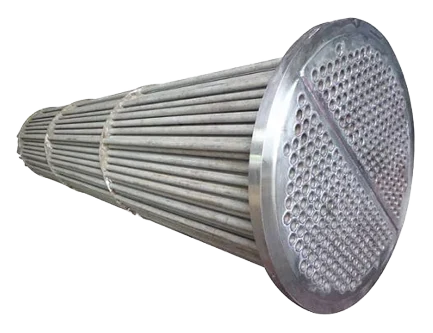
If the shell, nozzles and piping are sound, the bundle is the only part that has to change - and it can be better than the one that failed.
Same footprint, upgraded metal, no repiping.
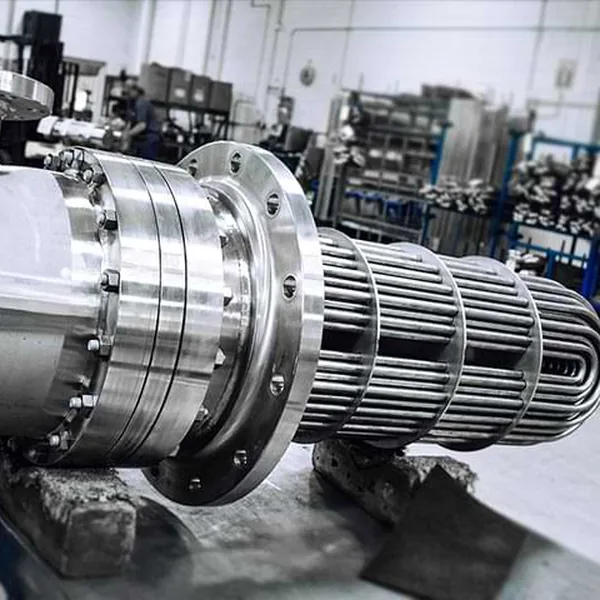
Matched to the shell you own
- Built to the existing shell bore and tubesheet
- Nozzle positions held so the piping bolts back up
- Reverse-engineered from a nameplate or drawing
- ASME U-1 data report used to confirm the design
- Custom bundles in as little as a few weeks
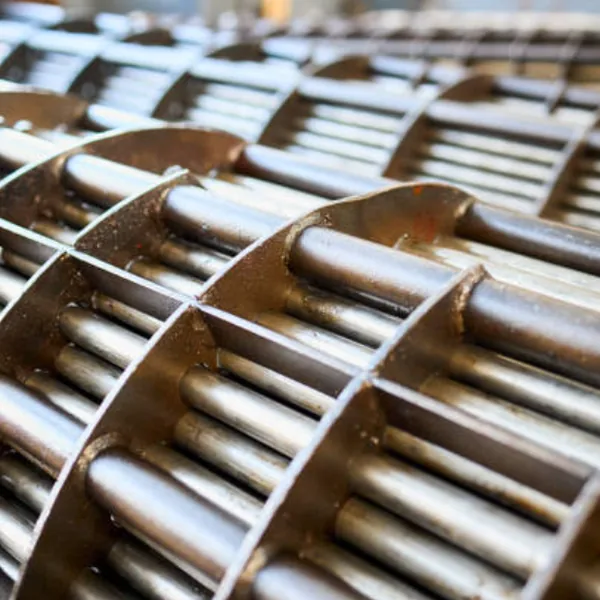
Better than the bundle it replaces
- Double tubesheet with leak detection option
- In-house passivation and electropolishing
- Tube upgrades to 316L, duplex or Hastelloy
- Tubes rolled into double-grooved tubesheets
- O-rings and gaskets stocked for Enerquip units
Parts We Supply

What We Supply and How Fast
Bundles and O-rings for the stock BEU units come off the shelf. Bundles for standard units and for other makers' exchangers are built to order, to measure.
| Item | Detail |
| Enerquip bundles | Stock BEU unit bundles held in stock; standard unit bundles built to order |
| O-rings | Stocked for Enerquip removable-bundle units, shipped quickly |
| Gaskets | Head, pass-partition, flange and tri-clamp gaskets for Enerquip units |
| Drop-in bundles | Built to another maker's shell, nozzle and tubesheet dimensions |
| Custom lead time | In as little as a few weeks |
| Matching sources | Nameplate, drawing or ASME U-1 data report |
| Bundle styles | U-tube or straight tube; single or double tubesheet |
| Materials | 304L, 316L, duplex, Hastelloy, AL-6XN, titanium and other alloys |
| Finishes | Passivation; electropolish to 15 Ra |
Ordering a Bundle Without a Second Trip
Read the failure before you reorder
A copy of the old bundle tends to fail the same way. Look at where the tubes let go. Pitting along the tube length points to a fluid the alloy cannot handle, and moving from 304L to 316L, duplex or Hastelloy fixes it. Thinning at the inlet end suggests erosion, so the velocity or the inlet arrangement needs attention. A tube-to-tubesheet leak in a sanitary or pharmaceutical unit makes the case for a double tubesheet, which drains any leak to the outside where it is seen. That second sheet adds length and changes how the bundle seats, so it is quoted against the whole exchanger. Photos of the pulled bundle, with the damage marked, tell us more than any description.
What to measure and send
Start with the nameplate photo and any paperwork; the ASME U-1 alone often fixes the design pressure, materials and shell size. If the drawing is gone, measure the old bundle on the floor rather than inside the shell. A tape across the tubesheet face, a count of the tube rows and a few photos from each end take minutes and save a round of questions later.
- Nameplate photo showing serial number, year built and design ratings
- Shell inside diameter and the tubesheet outside diameter and thickness
- Tube outside diameter, wall, count, length and number of passes
- Baffle count and spacing, plus the location of each nozzle
- Both fluids, flow rates and temperatures, and what failed
Gaskets
Every bolted joint on the exchanger depends on one. A bolted-head shell-and-tube seals its bonnet or channel to the tubesheet with a head gasket and its nozzles with flange gaskets, and on a multi-pass unit a pass-partition gasket keeps tube-side flow from slipping past the pass rib. Sanitary units add a tri-clamp gasket at every product connection. A partition gasket of the wrong thickness or shape lets fluid bypass the passes, so the exchanger loses duty without ever showing a leak on the outside.
The material has to suit the fluid and the temperature. EPDM handles steam, hot water and most CIP chemistry. PTFE resists nearly every chemical but creeps under bolt load. FKM suits oils and many solvents, and silicone is common on sanitary clamps at moderate temperatures. Industrial flanges usually take compressed fiber or spiral-wound gaskets. Fit a new gasket every time a joint is opened, because a gasket that has already been crushed will not reseal reliably.
- Model and serial number from the nameplate on Enerquip units
- Which joint: head, pass partition, nozzle flange or tri-clamp
- Gasket outside and inside diameter, thickness and pass-rib layout
- Both fluids, the peak temperature and the cleaning chemicals used
O-Rings
Stock Enerquip heaters use a removable bundle sealed with O-rings. A swap is a bolt-and-lift job rather than a weld repair. Give us the model and serial number from the nameplate and the matching bundle and O-ring set go out quickly. EPDM is the usual choice for steam, hot water and CIP solutions; FKM holds up better against oils and some solvents but does poorly in steam. A wrong compound swells, hardens or cracks, and the seal starts to weep.
Fit new O-rings with every bundle pull, even when the old ones look fine. Keep a spare set on the shelf beside the heater so the next pull does not wait on a shipment. For any other make, the measurements above start the drawing.
Call and talk it through with an engineer: 1-805-484-2992
Matching a worn-out bundle
Yes. The nameplate and the ASME U-1 data report give the design pressures, materials and the exchanger's basic configuration, and measurements of the old bundle supply the rest. Measure before the old bundle is scrapped. Once it goes to the recycler, the tubesheet thickness and baffle spacing go with it.
Stainless or alloy tubes inside a carbon steel shell is a common pairing. Check the shell-side fluid first: if it attacked the old tubes from the outside, the shell sees the same attack, and in a conductive fluid such as cooling water the steel next to a large stainless surface can corrode faster. Measure the shell wall before ordering.
Send the model and serial number from the nameplate. The O-rings are matched to that unit's bundle seal, and the stock sets ship quickly. Replace them every time the bundle comes out; a reused O-ring that has taken a set is a frequent cause of leaks right after reassembly.
Replace it when the shell is the problem. A shell with thin walls, cracked nozzles or corroded supports will outlive a new bundle by very little. The same applies when the duty has grown and the old surface area no longer holds temperature. Compare the bundle price with a stock unit before deciding.
Yes. Passivation and electropolishing are done in-house, so a replacement can leave with a finer finish than the original had, to 15 Ra electropolished. Say so at the quote stage, because the finish changes the tubing that is ordered and the time the bundle spends in the shop.
Related
Heat Exchangers
Industrial Shell & Tube
Custom industrial shell-and-tube heat exchangers in stainless, carbon steel and high alloys to 48" diameter, built to TEMA B, C or R and ASME stamped.
+ Learn More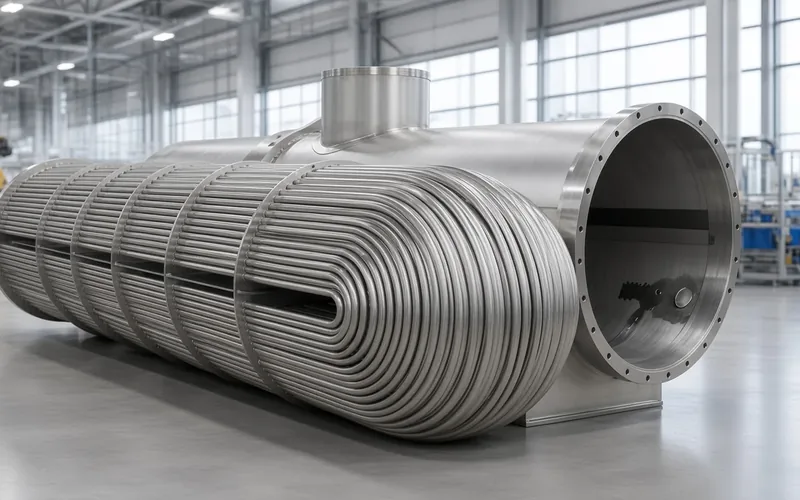
Heat Exchangers
U-Tube Exchangers
Enerquip U-tube heat exchangers: one tubesheet and a bundle free to expand and slide out, from stock BEU steam heaters to custom units to 48" diameter.
+ Learn More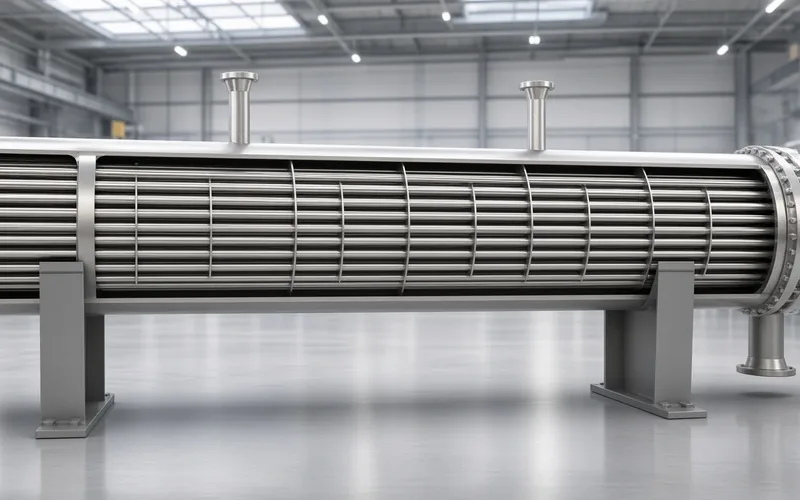
Heat Exchangers
Fixed Tube Exchangers
Enerquip fixed tubesheet, straight tube heat exchangers: tubes rodded end to end and replaced one at a time, single or multi-pass, sanitary or industrial.
+ Learn More