
1-805-484-2992
Quotes - Engineering - SalesHeating and cooling dairy without cooking it
Pasteurizers, product coolers and CIP heaters for fluid and cultured dairy
Enerquip has built sanitary heating and cooling equipment for dairies since 1985, and the core duties have not changed much: bring milk, cream, yogurt base or ice cream mix up to pasteurizing temperature, hold it, then pull it down fast enough to protect texture and flavor before filling. Liquid egg and whey protein concentrate follow the same path with less margin, because both start to set or foul on a hot tube wall well before the bulk fluid reaches temperature.
A shell-and-tube unit suits these duties because the product stays inside tubes with a polished bore, while steam, hot water or chilled glycol runs on the shell. There is no gasketed plate pack or narrow channel in the product path, so cultured products and higher-solids mixes pass without bridging.
Most dairy buyers reach us holding one of three things: a heater on the CIP skid that has started to leak, a new line that needs a 3-A heater and cooler pair, or a nameplate from a unit nobody in the plant can identify. Each has a quick path, usually starting with the stock and standard units below.
Request a Quote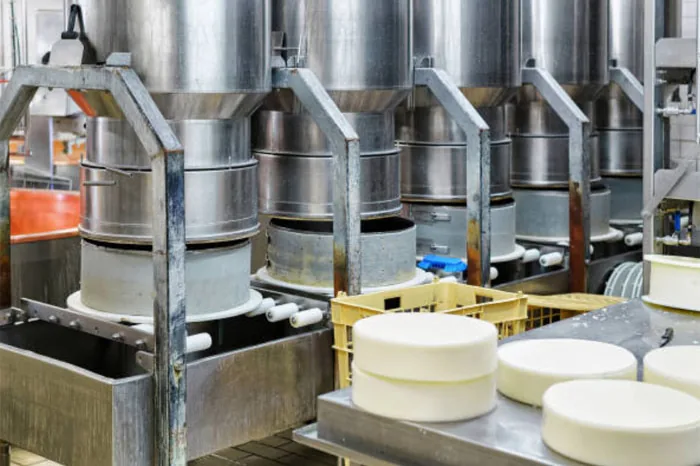
Dairy fouls at the tube wall, so size to the product
Surface area alone does not protect a heat-sensitive product. Wall temperature, velocity and residence time decide whether whey protein or egg scorches, so each dairy unit is sized to the product and then finished to 32 Ra or better.
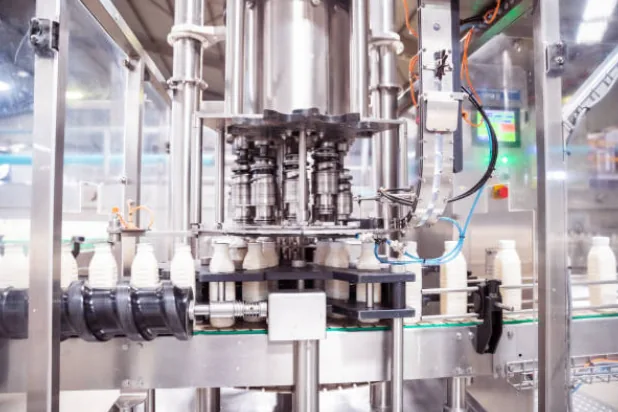
Pasteurizing and product cooling
- Milk, cream, yogurt base and ice cream mix
- Liquid egg and whey protein concentrate
- Steam or hot water heating on the shell
- Chilled water or glycol for the pull-down
- Product in the tubes for full drainage
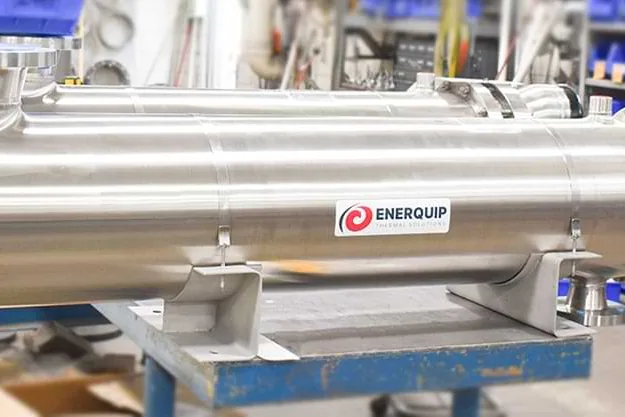
Built to the 3-A standard
- Fabricated to 3-A standard number 12-08
- 316L SA-213 seamless tubing, product side
- 32 Ra or better on product contact surfaces
- Exposed gasket design for thorough cleaning
Matching Enerquip equipment to dairy duties
Start with the duty. These are the pairings we quote most often for dairy plants, with the stock option listed first wherever one exists.
| DUTY | EQUIPMENT | WHY IT FITS |
| CIP solution heating | Stock BEU sanitary heater | Steam on the shell brings CIP solution to about 185 F; often ships the next business day |
| Pasteurizing milk and cream | 3-A sanitary U-tube heater | BEUB-3A-S models carry 316L tubes, a 32 Ra finish and the exposed gasket design |
| Cooling yogurt, mix and whey | Custom sanitary product cooler | Sized to viscosity and setting point, with glycol or chilled water on the shell |
| Warming a product tank | Sanitary bayonet heater | Fits an existing tank flange and lifts out whole for cleaning between batches |
| Leaking heater on a skid | Replacement bundle and O-rings | Stock bundles for Enerquip units; drop-in bundles built to fit a shell from another make |
Sizing a dairy exchanger to the product
Two heaters with identical surface area can treat milk very differently. One runs the product at a healthy velocity against modest steam; the other pushes slow tubes against hotter steam and bakes a film onto the wall within a shift. Our sizing starts from the product: its viscosity at inlet and outlet, its solids, how close the outlet sits to the point where proteins begin to set, and how long the line runs between cleanings.
Whey protein concentrate and liquid egg have little tolerance for a hot wall, ice cream mix carries sugar and stabilizers that thicken as it cools, and cultured products arrive with body that a narrow gap will not pass. For these, the answer may be more tube passes for velocity, a lower-temperature hot water loop in place of direct steam, or a longer shell rather than a wider one.
Waste heat is the other lever. A waste heat economizer can pull useful energy from hot condensate, a flash stream or warm product leaving the pasteurizer and hand it to incoming water or a CIP tank. An economizer that touches product gets the same sanitary details as the process units.
Cleaning and compliance in dairy
Milkstone on the hot pass
Milk heated against a hot tube wall leaves milkstone, a hard film of calcium phosphate and denatured protein, and it builds fastest on the hottest pass of a pasteurizer. The daily caustic and acid wash only removes it where the solution reaches the whole wall at full strength and temperature. The CIP heater on a dairy skid is built to the sanitary standard of the pasteurizer it cleans, and the CIP heater page covers sizing it.
Why the exposed gasket matters
A buried gasket groove holds residue that cleaning solution cannot reach, and it is one of the first places an inspector looks. The 3-A design leaves the gasket exposed to the cleaning flow, so the whole joint is washed on every cycle. When it is time to replace O-rings or gaskets, the bonnet comes off and the seal is in plain view.
Standard 12-08 and verification
Enerquip is certified to fabricate heat exchangers to 3-A Sanitary Standard 12-08 and takes part in the third-party verification the standard requires. Its engineers also sit in the 3-A work groups that develop the standards, so a rule change is known before it reaches the floor in Medford, Wisconsin. That shop handles stainless only, which keeps carbon steel contamination away from dairy work.
Stock first, custom second
Before a custom design is drawn, check the stock list. Ten stock BEU configurations in 4", 6", 8" and 10" shells, 36" to 72" long and about 8.8 to 70.3 sq ft, often ship the next business day, and about 32 standard sanitary models from 4" x 24" to 12" x 108" typically ship in 6 to 8 weeks. Custom units cover what neither list fits.
Choosing a dairy heater or cooler
No. Most stock BEU heaters are 304L construction. The 3-A units are the BEUB-3A-S models: one 8" x 54" stock unit in 316L/304L, plus the standard BEUB-3A-S sizes. On a CIP skid, a 304L stock heater suits caustic and nitric washes on low-chloride water; chlorinated sanitizer or high-chloride make-up water calls for 316L tubes. For direct product contact, specify a 3-A model from the start.
A drop-in bundle is built to the existing shell bore, nozzle locations and tubesheet dimensions, so the shell stays where it is on the skid. Send the nameplate, a drawing or the ASME U-1 data report and we will work from that. Custom bundles can be ready in as little as a few weeks, usually faster than replacing the whole exchanger.
Whey protein concentrate starts to denature and stick at a smaller margin above its process temperature than fluid milk does, so it lays down a film wherever the tube wall runs hottest. The fix is usually lower-temperature hot water on the shell, higher tube velocity, or both. Adding area while keeping the same steam pressure often makes it worse, because the product then moves slower.
Yes. Horizontal saddles and vertical mounting supports are both available, and the product side can be arranged to drain fully. A heater that is level on paper but slightly off on the floor can trap rinse water, which is exactly what a 3-A inspection will note.
Yes, on the product side. The 3-A finish and gasket rules govern the product contact surfaces, which on a cooler are the tubes, bonnets and product gaskets; the glycol side is not product contact. The cooler still has to keep glycol out of the milk, so tell us the glycol type and both operating pressures. Where a leak would stay hidden until a lot is tested, a double tubesheet with leak detection puts a failing tube joint in view.
Related
Sanitary Applications
Food & Beverage
Food and beverage heat exchangers for wort, juices, syrups, sauces and chocolate: sanitary shell and tube units, bayonet tank heaters and CIP heaters.
+ Learn More
Sanitary Applications
CIP Heaters
CIP heat exchangers for clean-in-place skids: steam on the shell heats caustic, acid and rinse solution to about 185 F in polished stainless tubes.
+ Learn More
Sanitary Applications
Personal & Pet Care
Personal care heat exchangers for lotions, creams, shampoos and pet food: sanitary 316L shell and tube with polished finishes and double tubesheets.
+ Learn More