
1-805-484-2992
Quotes - Engineering - SalesEnerquip, Supplied by HeatX
A Specialist Shop Behind Every Quote
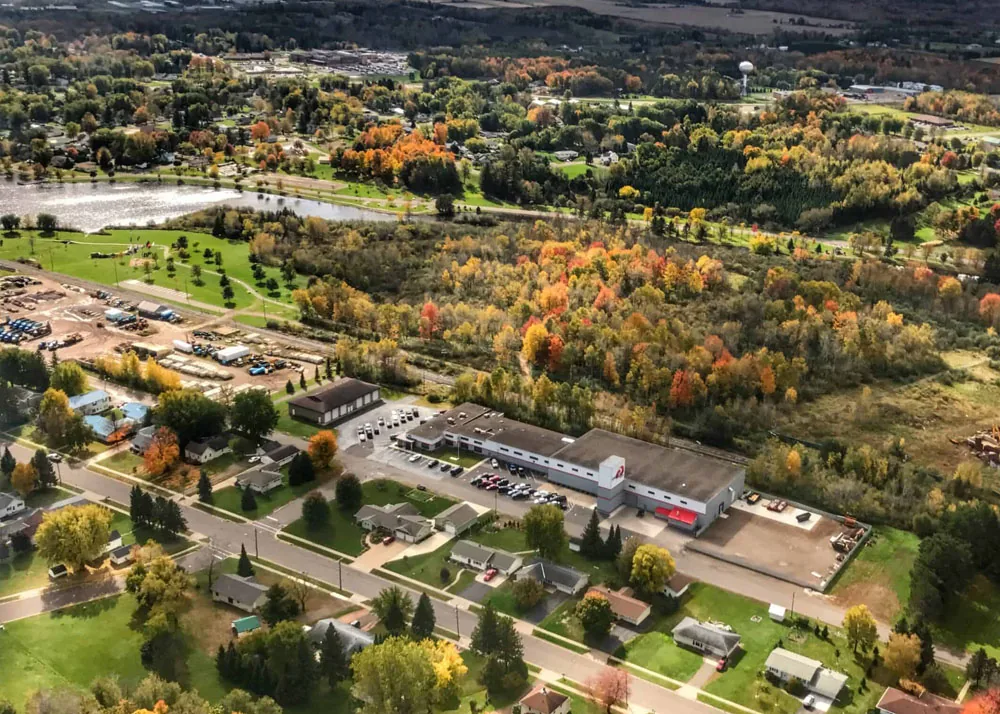
Every Enerquip unit is designed and built in the USA, a record that runs back to 1985. Sanitary and high-alloy work is done in Medford, Wisconsin, in a shop that handles stainless only, so carbon steel never comes near pharmaceutical or food-grade tubes. Carbon steel units come out of a second Enerquip plant in Beggs, Oklahoma.
HeatX is an authorized distributor and representative of the Enerquip line. We size the duty, choose the construction, quote it and stay with the order through delivery, so you deal with one engineer from the first question to the nameplate on the finished unit.
That arrangement gives a buyer the depth of a dedicated fabricator and the speed of stock units that often ship the next business day, with standard sizes typically out in 6 to 8 weeks.
What Stands Behind the Enerquip Name
Codes and Certification
Pressure vessels are built to ASME Section VIII; on stamped units a third-party inspector reviews the design and witnesses the hydro-test before the stamp goes on. Enerquip is certified to fabricate to 3-A Sanitary Standard 12-08 and builds to TEMA B, C or R, PED and CRN, with API-660 and other codes on request.
Materials Under One Roof
Carbon steel, 304L and 316L, duplex 2205 and 2507, Hastelloy, Alloy 20, Monel, AL-6XN and titanium are all routine. On high-alloy jobs, clad tubesheets and lap joint flanges cut the amount of exotic metal a unit needs.
Finishing Done In-House
Passivation and electropolishing happen in the same plant that welds the unit, so the finish is controlled rather than sent out. Product-contact surfaces reach 32 Ra or better on 3-A units and down to 15 Ra electropolished on pharmaceutical work, where exteriors and insulation jackets are polished to 40 Ra.
Engineering Checked Before Steel Is Cut
Designs are checked in Compress codeware for nozzle, seismic and site-specific loads before fabrication starts. Enerquip engineers also take part in ASME-BPE and 3-A standards work, so sanitary details follow current practice rather than last decade's.
The least expensive exchanger is often the one already on the shelf, so stock and standard sizes are checked before anything is designed.
Stock often ships next business day; standard in 6 to 8 weeks.
Sizing a New Duty
Send the fluids, flows, inlet and outlet temperatures and allowable pressure drop on each side, and we run the thermal design and choose the construction. That covers which fluid goes in the tubes, how many passes, whether U-tube or straight tube suits the temperature difference, and which material and finish the product calls for.
- Stock BEU sanitary heaters checked first
- Standard sizes from 4" x 24" to 12" x 108"
- Custom builds to 48" diameter in alloy or carbon steel
- ASME, TEMA B, C or R, 3-A, PED and CRN as required
Matching a Failed Exchanger
A nameplate, a drawing or an ASME U-1 data report is usually enough to reverse-engineer a replacement. From it we confirm shell size, tube count and layout, nozzle positions and code data, then quote either a drop-in tube bundle or a complete exchanger that bolts into the same piping.
- Stock bundles and O-rings for BEU units
- Drop-in bundles built to an existing shell and tubesheet
- Connections matched: tri-clamp, flanged, lap joint or NPT
- Photos of the unit and its piping help confirm fit
After the Order Ships
A quotation spells out the construction, the code and the delivery, so nothing is left to guess at order time. Once the order is placed we confirm drawings where the unit needs them, keep you posted while it is in the shop, and ship it with the paperwork the code requires, including the U-1 on stamped units.
If something about an installed unit does not look right later, call the engineer who quoted it rather than starting over with someone new. Quote the serial number, and a bundle or O-ring for that same exchanger years from now starts from the original data.