
1-805-484-2992
Quotes - Engineering - SalesDrawn around the fluid that attacks the metal
Up to 48" in diameter, in carbon steel through titanium Gr 2, and drawn to the TEMA class the project names: that is the range of Enerquip's industrial line. It covers multi-stage evaporation in ethanol plants, condensing organics in chemical plants, vaporizing LNG at refineries, cooling landfill gas, and duties at power plants, renewable fuels sites and tank terminals.
Go custom when a stock sanitary heater cannot carry the service. Typical triggers are a fluid that pits 304L, a design pressure or temperature beyond the standard models, a flange class set by the piping spec, nozzle loads from a long pipe run, or a TEMA class written into the project specification. Vapor to vapor, vapor to liquid, liquid to vapor, oil to steam and reboiler duties all land here.
Custom takes longer. The unit needs thermal design, a code calculation and an inspector's review before metal is cut, so it cannot leave the next business day the way a stock heater can. If your duty is clean steam heating a clean liquid, look at the stock units first. If it is not, the extra weeks buy an exchanger matched to the fluid, the piping and the people who will open it.
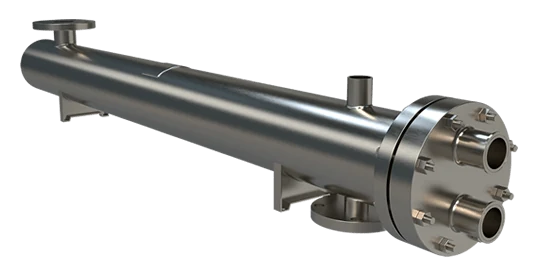
Expensive alloy belongs only where the corrosive stream touches; flanges, covers and backing plate can stay in a lower-cost metal.
Clad tubesheets and lap joint flanges keep the alloy on the wetted face.
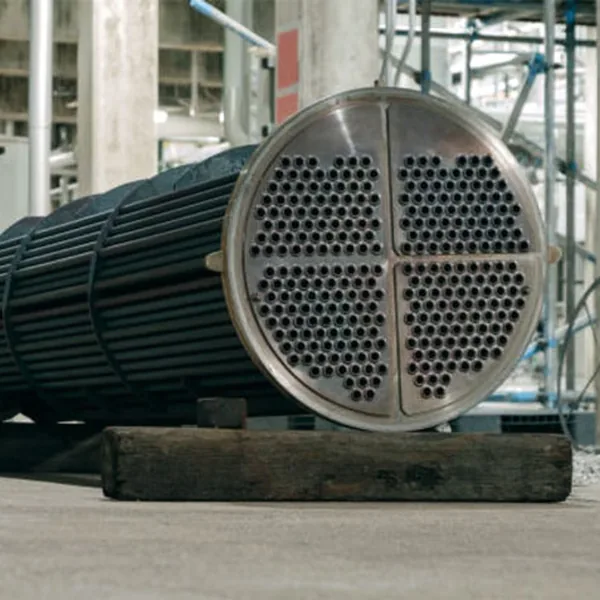
Metallurgy chosen for the stream
- Carbon steel through titanium Gr 2 and Hastelloy
- Duplex 2205 and 2507 for chloride-bearing service
- Explosion-bonded clad tubesheets and channel covers
- Lap joint flanges in place of solid alloy flanges
- Carbon steel built apart, in Beggs, Oklahoma
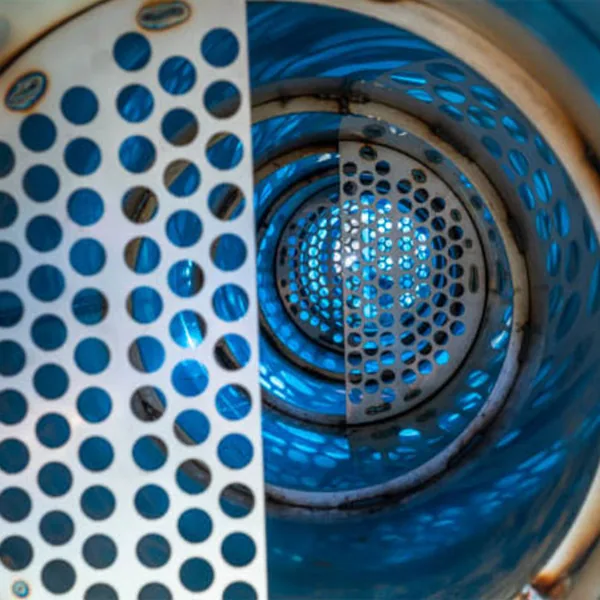
Opens up quickly for maintenance
- Davit arm or hinge carries a heavy bonnet
- Channel covers give tube access without repiping
- Jaygo clamps where a head comes off often
- Vacuum breakers and sight glasses as needed
- Floating tubesheet takes up thermal growth
Designed and Built To

Industrial Construction at a Glance
The ranges below cover what Enerquip builds for industrial service. Any combination can be quoted; the duty, the code and the plant specification decide which one fits.
| Item | Detail |
| Shell diameter | To 48", larger depending on weight |
| Bundle styles | U-tube, straight tube, hairpin, pipe-in-pipe or finned tube |
| Tubesheets | Fixed, floating or double; expansion joints where needed |
| Materials | Carbon steel, 304L, 316L, duplex 2205 and 2507, Hastelloy, Alloy 20, Monel, AL-6XN, titanium Gr 2 |
| Connections | ASME / ANSI flanged, lap joint, NPT threaded or sanitary tri-clamp |
| Design class | TEMA B, C or R to suit the service |
| Pressure code | ASME Section VIII stamp; API-660 and international codes on request |
| Design checks | Compress codeware for nozzle, seismic and site-specific loads |
| Where built | Stainless and alloy in Medford, Wisconsin; carbon steel in Beggs, Oklahoma |
Specifying an Industrial Exchanger That Lasts
Pick the TEMA class before the alloy
The class sets the weight of the exchanger. TEMA R covers the severe service of petroleum and related processing, C covers moderate commercial and general process duties, and B is written for chemical process service. R brings heavier minimum thicknesses and allowances, so it is right for a refinery reboiler and wasteful on a clean glycol loop. Each Enerquip design is run through Compress codeware for nozzle loads, seismic and site loads, and a third-party inspector reviews it, follows fabrication and witnesses the ASME hydro-test.
Put the alloy only where it works
Send the aggressive fluid through the tubes. Then only the tubes, tubesheets and channel need the expensive grade, and the shell can stay in 304L or carbon steel. On high alloy units, an explosion-bonded clad tubesheet or channel cover replaces a solid alloy plate, and lap joint flanges keep the alloy on the stub end while a lower-cost ring carries the bolts. A quote built on solid Hastelloy plate for a thick tubesheet can cost far more than a clad sheet that does the same job.
All-stainless exchangers are often priced close to carbon steel, because Medford runs a large volume of stainless work. Ask for both prices whenever the fluid allows either metal.
Design for the crew that opens it
Downtime costs more than hardware, so maintenence features go on the first drawing, where they cost least. Name how often the unit will be opened, how much clearance it has and how it will be lifted, and the design can follow.
- Davit arm or hinge assembly so the crew can swing a heavy bonnet clear safely
- Channel covers that expose the tube ends while nozzle piping stays bolted up
- Non-asbestos, chloride-free insulation to protect stainless under the jacket
- Twisted tape turbulators to lift tube-side transfer on slow or viscous flows
- Horizontal saddles or vertical supports sized for the plant structure
Economizers, thermal fluid heaters, steam generators and tank coils
A waste heat economizer recovers heat from a stream the plant already throws away, such as hot condensate, flue gas or a hot process discharge, and uses it to preheat boiler feedwater or a cold feed. Buyers ask for one when fuel cost is the target and the hot stream runs steadily.
Thermal fluid heaters work with a circulating hot oil, which carries heat at high temperature without the pressure steam needs at that temperature. A buyer asks for one when a process runs hotter than plant steam can reach economically, or when water must stay away from the product.
A steam generator boils water on one side with a hot fluid on the other: thermal oil, a hot process stream or high-pressure plant steam. Plants specify one to keep boiler chemicals out of a process that needs steam, or to turn recovered heat into steam for the rest of the site.
Tank coils, or sanitary bare coil tank heaters, are tubing formed to sit inside a vessel and carry steam, hot water or glycol. Bare tube is easier to clean than finned tube, and a coil spreads its heat over a large area of the tank wall.
For any of these, send the fluids, flows, temperatures and allowable pressure drop with the plant specification, and we will return a design and a price.
Call and talk it through with an engineer: 1-805-484-2992
Before you spec a custom unit
Often, yes, for common shell sizes. Enerquip's Medford shop works stainless every day, which keeps 304L and 316L material and labor competitive. Get both prices before deciding: the stainless unit usually needs less upkeep and lasts longer, and the price gap is frequently smaller than buyers expect.
When chlorides are the threat. Warm chloride service can pit 316L and start stress corrosion cracking, while duplex 2205 resists both far better and is stronger, which can allow thinner walls. Duplex 2507 goes further on strong brines and aggressive process streams. Beyond that, AL-6XN, Hastelloy or titanium Gr 2 take over, and the fluid analysis decides which.
Yes. API-660 and other international codes are available on request, along with PED for Europe and CRN registration for Canada. Name the code at the quote stage, because it changes thicknesses, documentation and inspection, and a late switch means the design is calculated again.
Enerquip builds shells to 48" diameter, and larger depending on weight. Weight usually limits size before diameter does, because of handling and shipping. If the duty needs more surface than one shell can hold, two shells in series often work better and are easier to maintain.
Because wet insulation can leach chlorides onto a hot stainless shell, where they concentrate and start stress corrosion cracking under the jacket. Nobody sees it until the shell weeps. Non-asbestos, chloride-free insulation under a polished stainless jacket removes the source, which matters most on units that cycle hot and cold outdoors.
Related
Heat Exchangers
U-Tube Exchangers
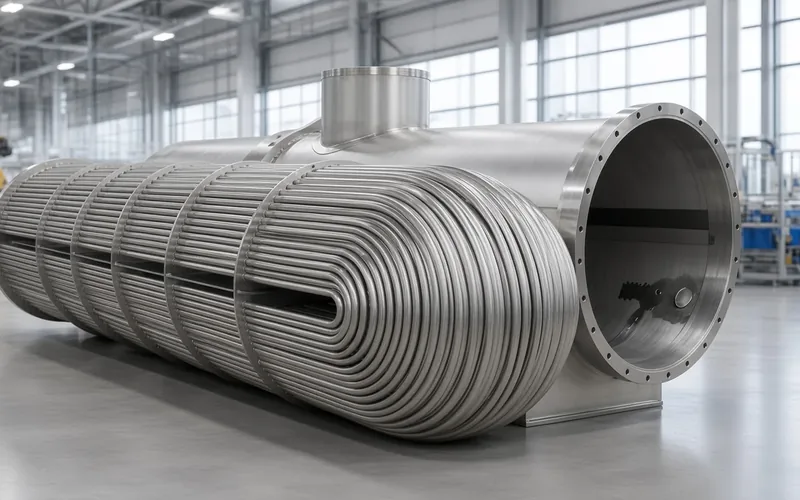
Enerquip U-tube heat exchangers: one tubesheet and a bundle free to expand and slide out, from stock BEU steam heaters to custom units to 48" diameter.
+ Learn More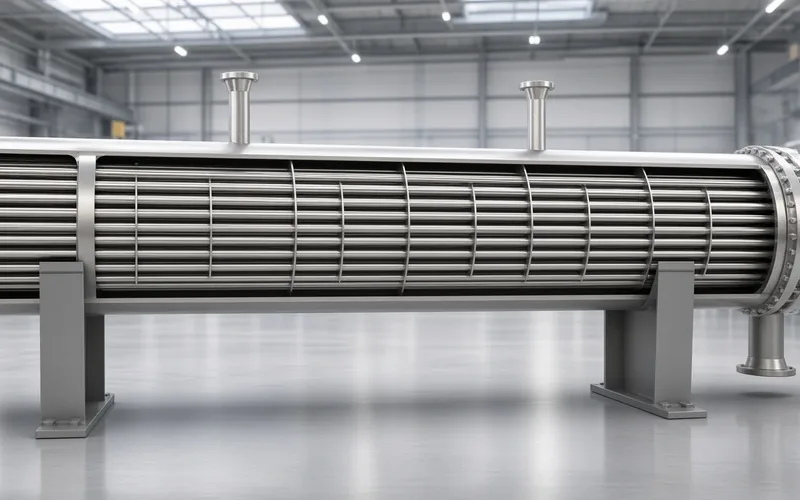
Heat Exchangers
Fixed Tube Exchangers
Enerquip fixed tubesheet, straight tube heat exchangers: tubes rodded end to end and replaced one at a time, single or multi-pass, sanitary or industrial.
+ Learn More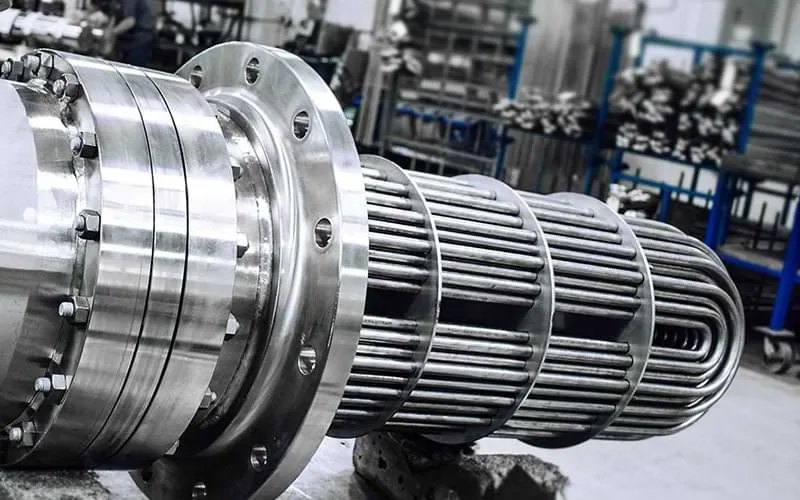
Heat Exchangers
Immersion Heaters
Enerquip bayonet immersion heaters warm a whole tank through a flange or manway it already has, with a removable bare or finned tube bundle.
+ Learn More