
1-805-484-2992
Quotes - Engineering - SalesHeat the whole tank through a nozzle already on it
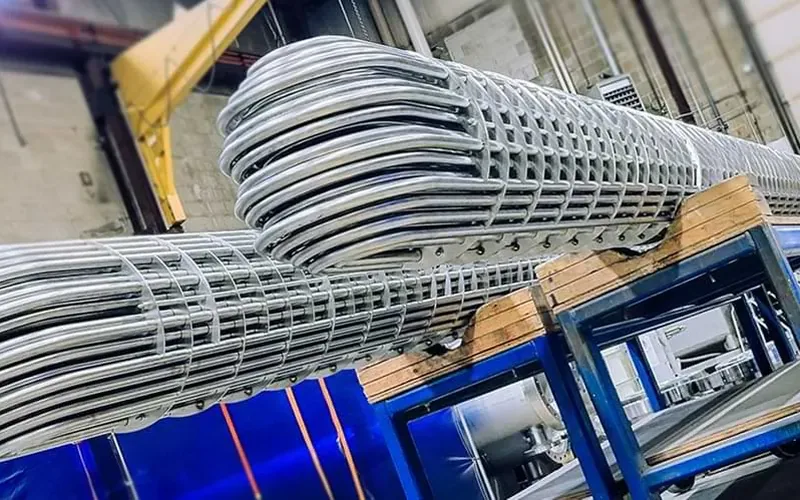
Most tanks that need heat already have a spare flange or manway, and that opening is all a bayonet heater asks for. The heater is a tube bundle built to live inside the tank: the tubesheet bolts to the flange or manway on the tank wall, the tubes reach into the liquid, and the bonnet on the outside carries the steam, hot water or thermal fluid connections. Because the whole bundle sits below the liquid level, every square foot of tube is working on the tank contents at once. Nothing is piped out of the tank and back, no circulation pump is added, and the heater takes no floor space beside the vessel.
It is the right choice when the goal is to bring an entire tank up to temperature, or hold it there, rather than warm a stream on its way somewhere else. Typical duties: keeping syrups and sauces pumpable, holding a chemical tank above the point where its contents crystallize, warming fuel in storage so it will transfer, and heating water or treatment chemicals.
Heat-up time is the limit to plan around. A submerged bundle relies on natural convection unless the tank has a mixer, so a very large or very viscous tank comes up slowly and can stratify, hot near the bundle and cold at the far end. A bundle mounted low in the tank, where warmed liquid rises through the whole volume, heats more evenly, and a mixer helps further. Where only the liquid leaving the tank needs heat, a suction heater is the better fit.
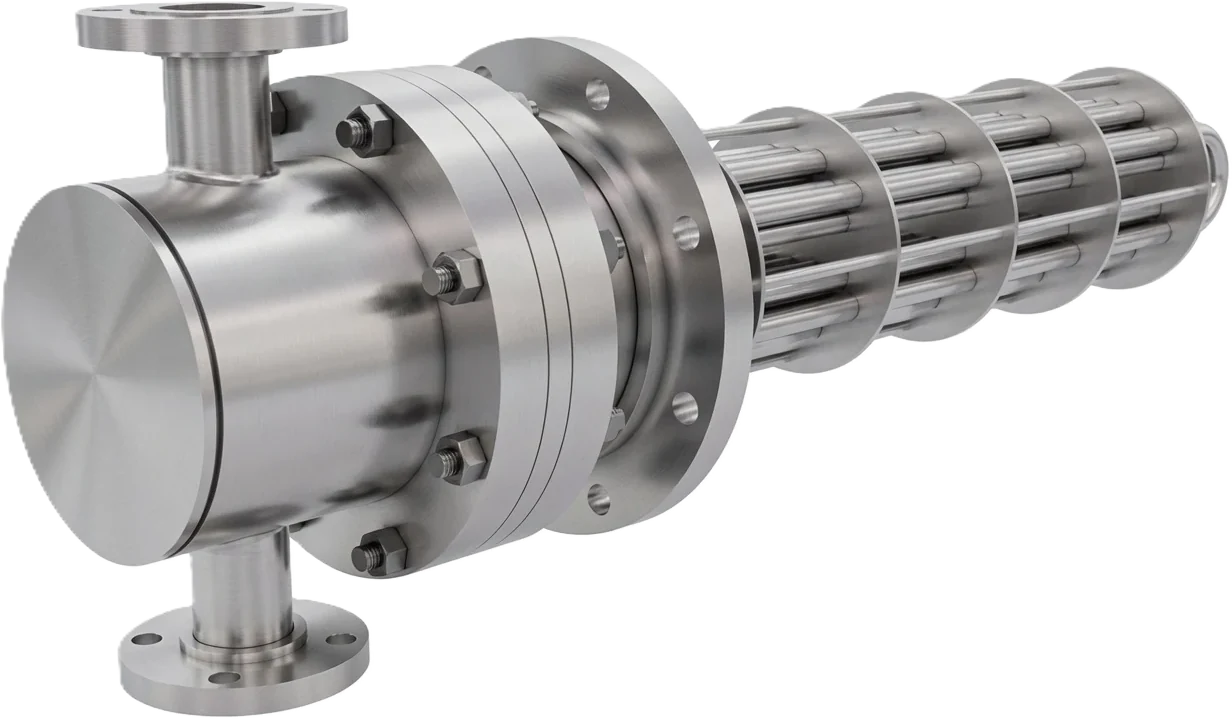
A bayonet heater turns a flange you already own into heating surface, and it comes back out through that same opening when the tubes need attention.
No new nozzle, no pump loop, no floor space.
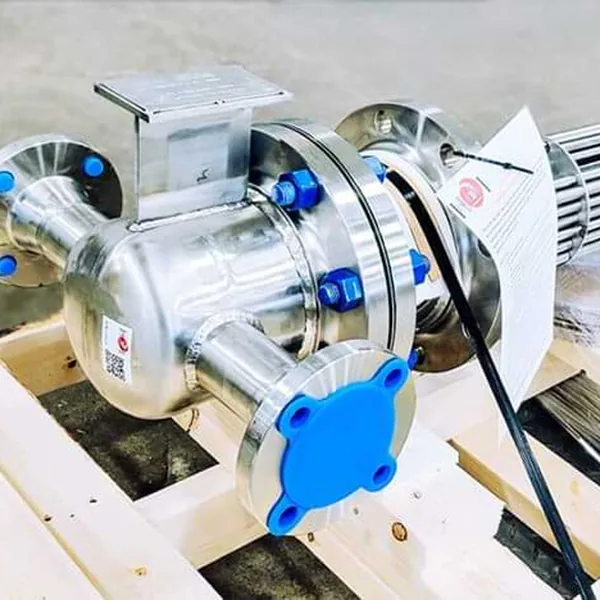
Pulls out in one piece
- Tubesheet, bundle and bonnet remove as one assembly
- Bolts to an existing tank flange or manway
- Utility connections stay on the outside bonnet
- Bundle is cleaned or inspected on the floor
- A spare bundle keeps the tank heated during cleaning
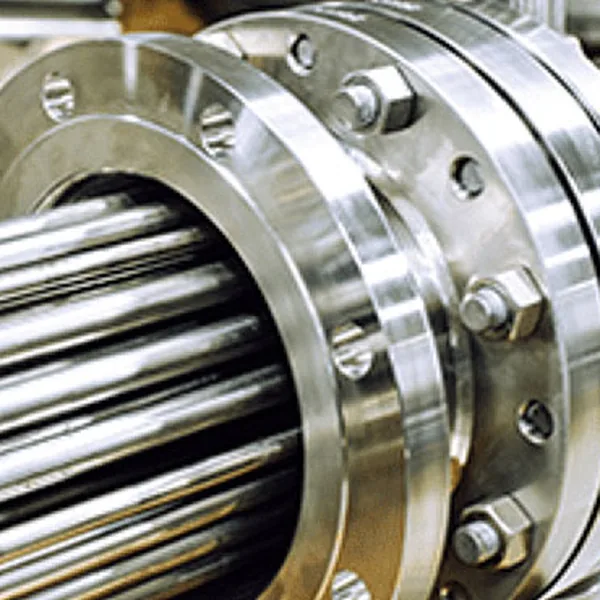
Tube style matched to the contents
- Bare tubes for sanitary and sticky products
- Helically wound fins add surface in a short bundle
- Thermowells let sensors come out with the tank full
- Thermostats hold the setpoint without an operator
- 304L, 316L and higher alloys for corrosive contents
Specify It With
Bayonet heater construction and options
The table lists what goes into a bayonet heater and the choices settled at quote time. Bundle length, tube count and fin style are then set by the tank and the duty.
| Item | Detail |
| Main parts | Tubesheet, tube bundle and bonnet with utility connections |
| Mounting | Fits existing tank flanges and manways |
| Tube style | Bare tube or helically wound finned tube |
| Heating media | Steam, hot water or thermal fluid inside the tubes |
| Controls | Thermostats and thermowells |
| Materials | 304L, 316L, carbon steel, duplex, Hastelloy, Alloy 20, Monel, AL-6XN, titanium |
| Connections | ASME flanged, NPT threaded or sanitary tri-clamp |
| Code | Designed to ASME Section VIII and hydro-tested |
| Finishes | In-house passivation and electropolishing for sanitary tanks |
Choosing and fitting a bayonet heater
Sanitary heaters for food and pharma tanks
In a food tank the heater is a product-contact surface. So it is built the way the rest of a sanitary line is: 316L or 304L stainless, polished contact surfaces, passivated in-house and electropolished where the spec calls for it. Bare tubes are the norm, since fins trap product where CIP cannot reach. Syrups, sauces, dairy blends and pharmaceutical solutions all follow this pattern. Ask for a finish that matches the vessel it goes into; a heater rougher than the tank wall becomes the place residue collects first.
Industrial heaters for storage and terminals
Tank terminals, chemical plants, oil and gas storage, pipeline transfer stations, water treatment and power generation use the heavier version, where corrosion and fouling matter more than finish. Acids, solvents and other aggressive contents push the tube material toward duplex, Hastelloy, Alloy 20 or titanium. Fuels and heavy oils in carbon steel tanks can take a carbon steel heater from Enerquip's Beggs, Oklahoma shop. Finned tubes earn their place on clean, thin liquids, where the extra surface shortens the bundle that has to fit inside the tank.
- Acid, solvent and corrosive tanks in chemical processing
- Fuel and crude storage at terminals and transfer stations
- Water and treatment chemical tanks at municipal and industrial plants
- Water heating duties at power generation sites
What it takes to size one
Sizing starts with the tank. We need the tank volume and shape, the size and rating of the flange or manway the heater will use, and how far a bundle can reach before it meets a wall, mixer shaft or dip pipe. Add the liquid, its present and target temperature, how long you can wait to get there, and the heating medium on hand. Check what an uninsulated tank loses in winter as well as the heat-up load; sometimes the holding load sets the size.
Installing and pulling the bundle
Leave clear ground outside the tank at least as long as the bundle, or it cannot be withdrawn without moving piping, platforms or other equipment out of the way. On steam service, the condensate outlet belongs at the low point of the bonnet with a trap that drains freely; flooded tubes lose most of their heating surface and can hammer when steam returns. Lower the tank level below the opening before pulling, and plan on a new gasket for every removal.
Call and talk it through with an engineer: 1-805-484-2992
Before you retrofit a tank
The tubesheet is built to the size and rating of the flange or manway on the tank, so the heater bolts on where a blind flange sits today. Send that flange data and the clear depth inside the tank. The limit is rarely the opening itself; it is whatever sits in the bundle's path, such as an agitator, a baffle or a fill pipe.
Bare tubes for anything sticky, viscous, sanitary or prone to fouling; finned tubes for clean, thin liquids where extra surface lets a shorter bundle carry the load. Deposits build between the fin windings and are hard to remove by hand, so picking fins to save length on a fouling service usually gives that surface back within months.
A sensor in a thermowell drives a control valve on the steam or hot fluid supply, and a thermostat can cut the heat at a set temperature as a safeguard. The thermowell lets the sensor be replaced with the tank full. Place it where it reads the bulk liquid, well away from the tubes, or the tank runs cold while the controller reads hot.
Yes. Steam gives the most heat from the smallest bundle because it condenses at one temperature along every tube. Hot water and thermal fluid give up heat as they cool, so the tubes run cooler toward the outlet and the bundle needs more surface for the same duty. Thermal oil reaches high temperatures without steam pressure and needs no condensate trap, which suits heavy products.
The nameplate or drawing of the old heater plus the tank flange details. A leaking bundle either puts condensate into the product or puts product into the condensate return, so it is worth replacing before a batch or a boiler is affected. Because the heater is a bolt-in assembly, the new one goes onto the same opening with no change to the tank.
Related
Heat Exchangers
Replacement Bundles
Replacement tube bundles, O-rings and gaskets for Enerquip exchangers, plus drop-in bundles built to your shell from a nameplate, drawing or U-1.
+ Learn More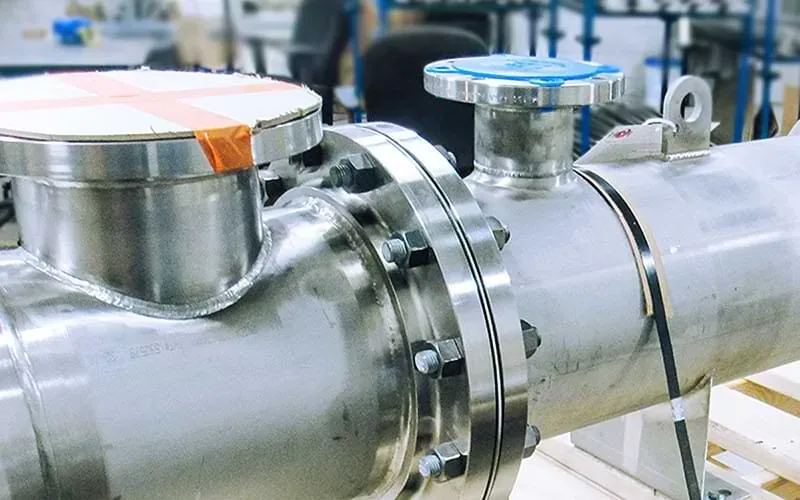
Heat Exchangers
Industrial Shell & Tube
Custom industrial shell-and-tube heat exchangers in stainless, carbon steel and high alloys to 48" diameter, built to TEMA B, C or R and ASME stamped.
+ Learn More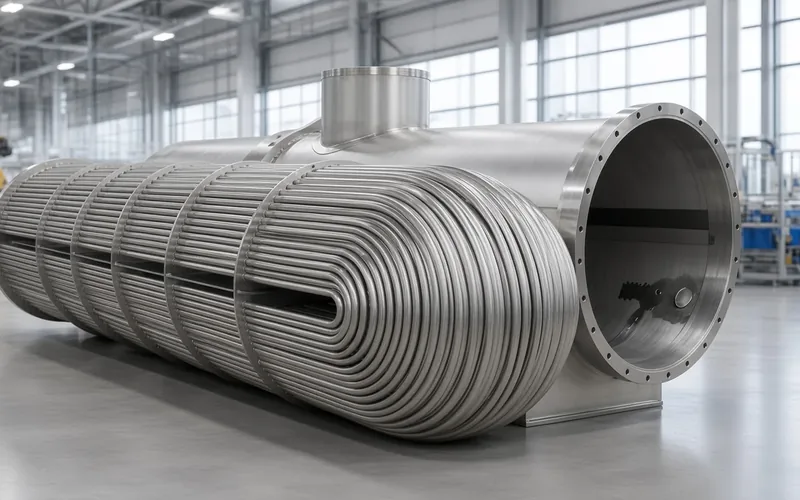
Heat Exchangers
U-Tube Exchangers
Enerquip U-tube heat exchangers: one tubesheet and a bundle free to expand and slide out, from stock BEU steam heaters to custom units to 48" diameter.
+ Learn More