
1-805-484-2992
Quotes - Engineering - SalesA heat exchanger at every step of the extraction
Chilling, winterizing, recovering solvent, decarboxylating and distilling
Follow the ethanol through a cannabis or hemp extraction plant and it passes through a heat exchanger at nearly every stage. It is chilled to subzero temperatures before it meets the plant material. The tincture is held cold for winterization so waxes and fats drop out. The solvent is then boiled off in an evaporator, condensed and sent back to the tank, and the concentrated oil moves on to decarboxylation, distillation and a final cooler before testing.
Each of those steps has a different hot or cold side, and each fails for a different reason. The chiller fights the cost of refrigeration. The evaporator fights scale-up. The condenser fights fouling and solvent loss. The product cooler fights the clock between the still and the packaging line. Enerquip builds sanitary stainless shell-and-tube equipment for all of them, and can build to the 3-A Sanitary Standard where the buyer asks for it.
Request a Quote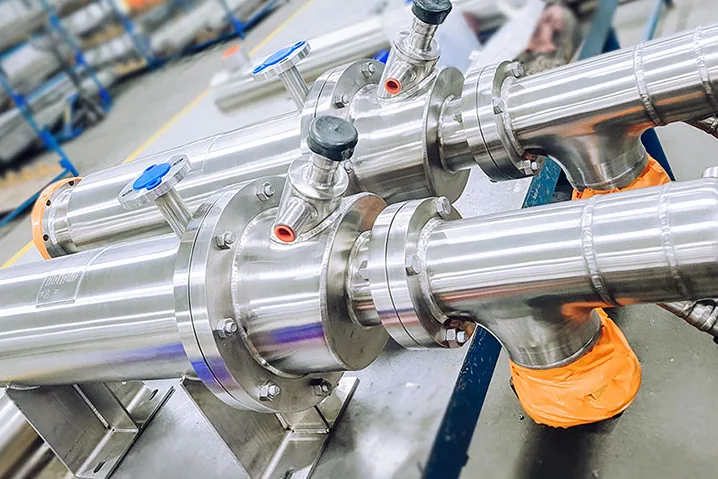
Ethanol extraction runs on cold before it runs on heat
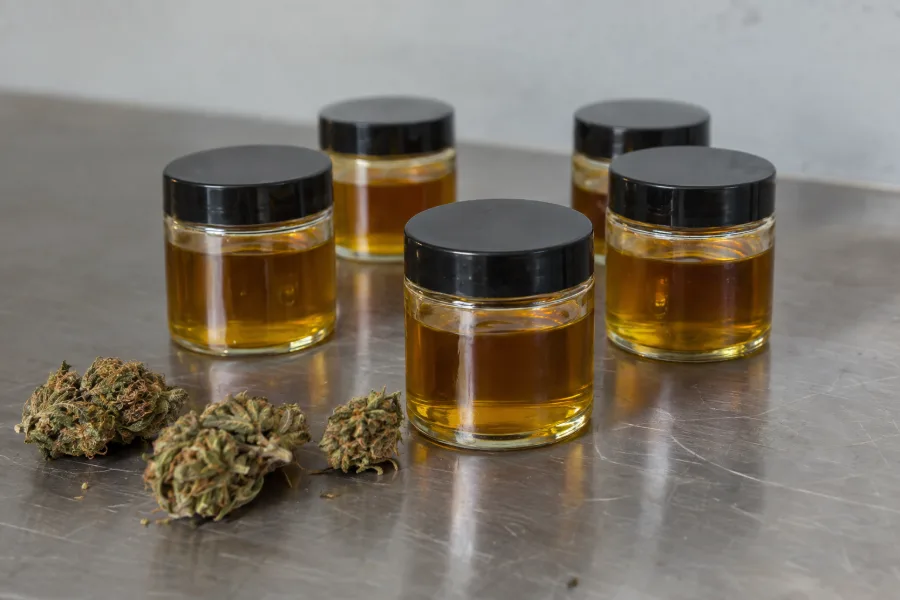
Chilling ethanol to subzero temperatures sets the size of everything downstream, and a glycol or thermal oil loop planned around a 10 F coolant rise needs more flow than most first estimates allow.
Subzero ethanol chilling
- Ethanol on the sanitary tube side
- Thermal oil or liquid nitrogen on the shell
- U-tube with a removable bundle for cleaning
- Single or multi-pass with removable bonnets
- Insulated against frost and condensation
Solvent recovery that holds up
- 32 Ra food-grade finish as the minimum
- Electropolish option for a near-mirror bore
- Rising film calandria or falling film units
- Product on the tube side, utilities outside
Extraction steps and the equipment for each
Five steps in a typical ethanol extraction line, and the Enerquip unit we would quote for each. Evaporators are built to the system builder's sizing; the rest we size with you.
| DUTY | EQUIPMENT | WHY IT FITS |
| Chilling ethanol subzero | Sanitary U-tube chiller | Ethanol in the tubes, thermal oil or liquid nitrogen on the shell, and a bundle that comes out |
| Recovering ethanol vapor | Solvent recovery condenser | Closed condensing returns solvent to the tank instead of losing it to atmosphere |
| Evaporating solvent from oil | Rising or falling film evaporator | Vertical shell-and-tube with steam or hot oil on the shell, sized from test-center data |
| Cooling oil before testing | Sanitary product cooler | Product in polished tubes, with chilled water, glycol or thermal oil baffled across the shell |
| Heating a decarboxylation tank | Bayonet immersion heater | Brings a whole batch up to temperature through an existing flange and lifts out for cleaning |
Evaporators, reboilers and the scaling problem
Recovering the solvent takes an evaporator. After extraction, the ethanol or hydrocarbon solvent has to be boiled off the oil and recovered. One common route is a rising film unit: a vertical shell-and-tube, often called an external calandria or reboiler, with steam or hot thermal oil on the shell and the oil and solvent mixture fed upward through the tubes. The solvent vaporizes and leaves the top for the condenser, and the concentrated product moves on.
A falling film evaporator turns that around. The mixture enters at the top and runs down the inside wall of each tube as a thin film, the heating medium stays on the shell, and solvent vapor flashes off as the product descends. The film is gentle on heat-sensitive oil because any given portion of it spends only a short time against the hot wall.
Because oil and solvent mixtures vary from one feedstock to the next, the evaporation system builder normally sizes the evaporator from runs at its own test center, and Enerquip builds the shell-and-tube to that sizing. The catch is scale. An evaporator proven at one flow does not perform the same at half or double that flow, so a plant with several production lines may need one evaporator per line rather than one large unit shared between them.
Finish follows the product. Evaporator and reboiler contact surfaces should be polished to 32 Ra food grade at minimum, and the pharmaceutical level of about 20 Ra electropolished is available where the buyer wants it. Keeping the product on the tube side and the utilities on the shell is what makes those finishes practical, since a tube bore is far easier to polish and inspect than the outside of a bundle.
Condensing, cooling and the steps between
Closed-loop solvent recovery
Every liter of ethanol that leaves as vapor is a liter bought again. A closed vapor recovery condenser turns the evaporator overhead back into liquid without venting it, so the solvent returns to the tank for the next batch. Fouling and scale in the tubes and bonnets are the usual enemies, which is why 32 Ra is the starting point for these condensers and electropolishing removes the crevices where residue builds.
Winterization and decarboxylation
Winterization holds the ethanol and crude extract cold long enough for waxes and lipids to come out of solution before filtering, so it leans on the same chilled loop that feeds the extraction. Decarboxylation does the opposite, heating the oil to convert the acid forms of cannabinoids, and distillation adds another heat-and-condense step. Each is a seperate duty with its own temperatures, and each deserves its own sizing.
Product coolers before packaging
Once the solvent is gone, the oil must be cooled before it is tested and packaged. A shell-and-tube cooler keeps the product in the sanitary tube side while chilled water, a water and glycol mix or thermal oil runs across the shell, guided by baffles. The two streams never mix, and straight tubes are easier to clean and inspect than a coil. Plan the coolant loop around a rise of about 10 F across the exchanger.
Sizing the chiller loop
The refrigeration chiller and the exchanger have to be designed together. The chiller set point, the coolant flow and the exchanger surface all trade against each other, and a loop with too little flow will either miss the outlet temperature or force the chiller to run colder than it needs to. Give us the ethanol flow, its target temperature and the coolant you plan to use, and we will work the numbers both ways.
Extraction lab sizing questions
Not well. Whenever one line is down, the shared evaporator runs far below the flow it was tested at, the film thins out and the tubes begin to foul. Plants whose lines start and stop independently are often better served by one evaporator per line. If you already own a shared unit, give the system builder the real minimum flow before the next expansion.
The shell side. Ethanol runs through the sanitary tubes, where the finish can be polished and inspected, and liquid nitrogen or thermal oil runs around them. A U-tube bundle suits the large temperature difference because each tube can move on its own as the metal contracts. Tell us whether the nitrogen enters as liquid or vapor, because it changes the design.
Not by default. 3-A materials and a 32 Ra food-grade finish are the practical baseline for anything that touches extract sold as a consumable, because they clean faster and hold less residue between batches. Enerquip can build to the 3-A standard when the buyer or the buyer's customer asks for it, and it is easier to specify at the start than to add later.
The condensers and coolers follow the same sanitary pattern, but light hydrocarbon solvents boil far lower than ethanol, so condenser coolant temperatures and evaporator heating media are set differently. Recovering and condensing hydrocarbon vapor is a standard duty for Enerquip condensers. Send the solvent, its operating pressure and the recovery rate, and we will size from there.
Related
Process Applications
Refining
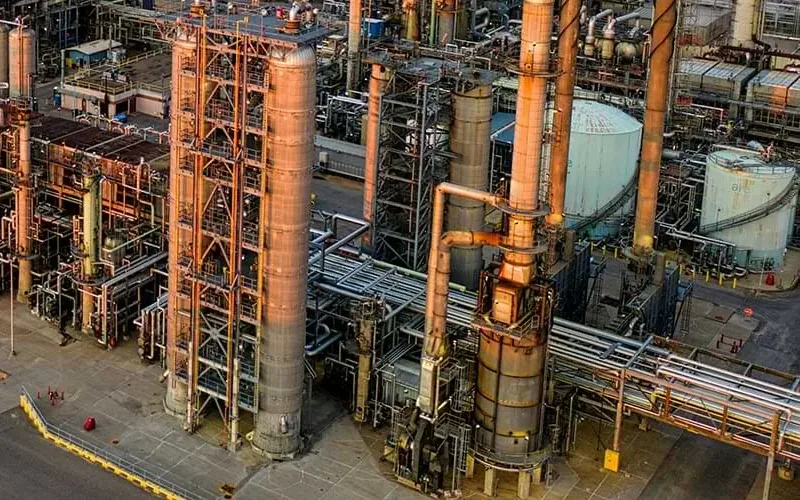
Refining heat exchangers and refinery shell and tube units: reboilers, condensers, coolers and tank heaters built to TEMA R and ASME, API-660 on request.
+ Learn More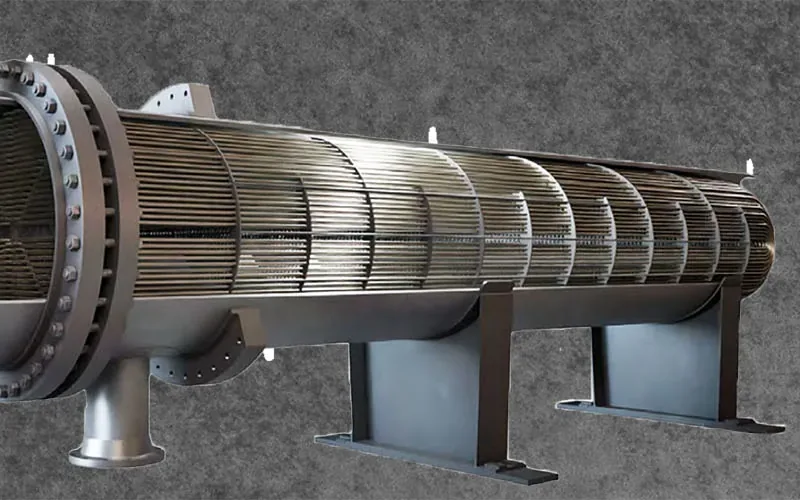
Process Applications
Suction Heaters
Enerquip tank suction heaters warm only the product leaving the tank - heavy fuel oil, molasses, tallow, wax - with a removable steam or hot-oil bundle.
+ Learn More
Process Applications
Pharmaceutical
Pharmaceutical shell and tube heat exchangers for WFI, CIP and bioprocess duties: 316L tubes at 25 Ra or better, electropolish and double tubesheets.
+ Learn More